
Sital’s MIL-STD-1553 Single and Multi I/O Boards and Testers
MIL-STD-1553 Boards and Testers
Sital lead the industry with its range of MIL-STD-1553 boards and testers. They are designed to meet the sophisticated needs of military, aerospace, industrial, and automotive applications. Our offerings encompass single and multi I/O configurations for compatibility with a wide array of data bus protocols including MIL-STD-1553, ARINC-429, EBR-1553, and more.
Our MIL-STD-1553 and Multi I/O Cards
Our Multi I/O cards are engineered for superior performance, featuring:
- ARINC-429 transmit and receive channels
- EBR-1553, 16PP194, and H009 protocols
- Comprehensive digital I/O solutions, including discrete avionics I/O and RS-422/485 serial interfaces
- ARINC-825-4/CAN Bus compatibility
Targeted for flyable applications, these boards are DO-254 certifiable to DAL A, showcasing Sital’s commitment to quality and reliability.
Broad Range of Form Factors
Sital’s MIL-STD-1553 boards and testers are available in various form factors to suit any system requirement:
Our Multi I/O Cards feature up to 8 channels of 1553 boards and testers. They support single-function and tester variants that are configurable for BC, RT, Monitor, or RT/Monitor modes.
Software Support
For efficient integration and operation, Sital provides a variety of API/libraries/drivers across Windows, Linux, and VxWorks platforms. Our tester boards come with dedicated Windows and Linux drivers, complemented by the COMposer GUI software for sophisticated simulation, testing, and monitoring.
Enhanced Cyber Security with SnS Technology
Sital’s proprietary Safe and Secure (SnS) technology offers unparalleled cyber security, capable of detecting cyber violations and electrical faults in real-time. This includes the intuitive identification of intermittent or continuous open or short circuit faults across the 1553 bus system, significantly reducing the time required to locate wire faults.
Additional Security Features
Our boards may include IRIG-B time input and cyber-attack emulation, providing an extra layer of security for sensitive applications. For over 26 years, Sital has been a trusted provider of data bus interfaces, demonstrating our extensive expertise and commitment to innovation.
IP Cores and Integration Services
Sital’s IP cores, optimized for SoC/MPSoC FPGAs like Zynq Ultrascale+, offer SWaP-C solutions for MIL-STD-1553 and other DataBus protocols. We ensure compatibility with industry standards and offer software drivers for various operating systems and integration with FPGA interconnect buses like AXI.
MIL-STD-1553 Components and Services
Beyond IP and software, Sital provides a full suite of 1553 components, including boards, testers, transceivers, transformers, and couplers. Our transceivers are recognized for their low power dissipation, incorporating mechanisms to eliminate dynamic offset.
Our integrated 1553 service facilitates the swift integration of IP and software on SoC/MPSoC FPGAs. This service leverages tools like Vivado and Vitis. Additionally, it significantly reduces FPGA system integration times. This allows customers to focus on higher-level hardware and software development.
In partnership with third-party providers, Sital ensures DO-254 and DO-178 certifiability up to DAL A. It highlights our commitment to delivering secure, reliable, and high-quality MIL-STD-1553 solutions.

Please Ask Us A Question
Boards and Testers for MIL-STD-1553
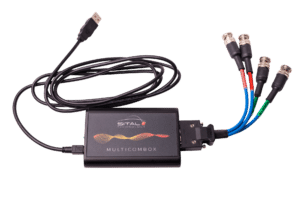
MultiComBox - USB
MultiComBox provides full MIL-STD-1553B test, simulation and bus analysis capability in a compact self-contained unit.
It connects over a USB 2.0 interface to any host system and operates from USB power and available with many different mixes of I/Os and other options.
Physimux
Physimux is a new and innovative tool for developing, testing and Specifications Analyzing avionic networks and its units for communication anomalies such as cyber attacks.
In addition to traditional testing functionalities such as simulating and Monitoring Mil-Std-1553 busses, Physimux is introducing a unique capability of monitor, detect and report on cyber attacks in real-.
PCIe – MIL-STD-1553 PCI Express Board / Tester
Sital Technology’s PCI Express HyperBoard provides up to eight MIL-STD-1553 interfaces with options for H009 and 16PP194.
The board is available with two different options:
- As a standard interface board with flight ready BRM1553D.
- As a tester/simulator board for lab development.

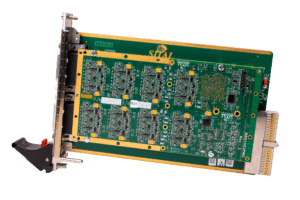
cPCI – MIL-STD-1553 / ARINC-429 cPCI-Interface-Cards
Multi-Standard cPCI Card for Avionics Interfaces including:
Mil-Std-1553, H009, WB-194, ARINC 429, Digital and Avionics Discrete I/Os, RS-485 and others.
cPCI HyperBoard is a cPCI-compatible, multi-standard board that contains up to 8 channels of Mil-Std-1553.
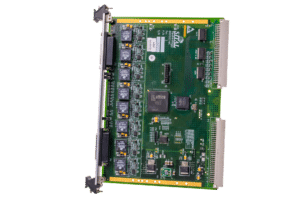
VME – BRD1553VME
1-8 Channel MIL-STD-1553 VME Board For RT, BC and Monitor applications
SPI to-MIL-STD-1553 Board
Fully functional 1553 BC/RT/MT module with backend PMOD connectivity.
Highly integrated and self-contained module with the 1553 protocol engine, transceiver and transformer for dual-redundant Mil-Std-1553 applications. Out of the box project files for various platforms for rapid prototyping.
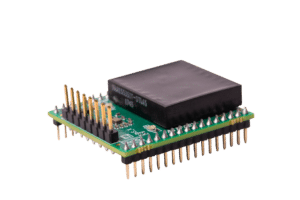
PC/104+ Multi I/O Board
Multi-Standard PC-104+ Card for Avionics Interfaces.
BRD1553PC104 Board is a PC-104+ Card, multi-standard board that contains 2 dual-redundant channels of Mil-Std-1553. It is compatible with Mil-Std-1553B and Mil-Std-1760 and its channels can be configured independently to work with H009 and WB-194 in conjunction with 1553.

8-Channel Multi-I/O PMC Board
Multi-Standard PMC Card for Avionics Interfaces, with front connector.
PMC-FC is a PCI Mezzanine Card, PMC-compatible, multi-standard board that contains up to 8 channels of MIL-STD-1553.
It is compatible with MIL-STD-1553B and its channels can be configured independently to work with H009 and WB-194 in conjunction with 1553.