
Sital’s MIL-STD-1553 Tranceivers and Transformers

Home > Sital’s Innovative MIL-STD-1553 Bus Solutions with BC Firewall > Sital’s MIL-STD-1553 Tranceivers and Transformers

MIL-STD-1553 Tranceivers and Transformers

Explore Sital’s leading-edge MIL-STD-1553 transceivers and MIL STD 1553 transformers, engineered for unparalleled power efficiency and performance in high-reliability applications. These components set a new industry benchmark for low power consumption and minimal dissipation, thanks to innovative power-switching devices.

1553 Components   |  1553 Boards and Testers   |  1553 IP   |  1553 Couplers

Innovative Power Efficiency

Sital’s MIL-STD-1553 transceivers and 1553 transformers utilize advanced power-switching technology to significantly reduce output stage power dissipation to less than 300 mW when transmitting at a 100% duty cycle. This achievement represents the industry’s pinnacle of low power consumption. This ensures efficient operation even in the most demanding environments.

MIL-STD-1553b and MIL-STD-1760 Compliance

When paired with matching isolation transformers, Sital’s MIL 1553 transceivers meet and exceed the requirements of MIL-STD-1553B and MIL-STD-1760 standards. Rigorous validation testing confirms their compliance, making these components ideal for applications requiring the highest levels of reliability.

Sital’s SIT-2579: Dual-Channel Transceiver/Transformer Combo

The SIT-2579 is Sital’s premium offering for high-reliability (Hi-Rel) applications, combining a dual-channel MIL-STD-1553/1760 transceiver with a dual isolation MIL-STD-1553/1760 transformer in one compact solution. This design ensures transformer (stub) coupling and emits a minimum stub voltage of 20 volts peak-to-peak which are suitable for MIL-STD-1760 applications.

Leading Low Power Dissipation

The SIT-2579 is renowned for its industry-leading low transmitter power dissipation, reducing power consumption to under 300 mW at a 100% transmit duty cycle. Packaged in a 16-pad leadless, surface-mount package, the SIT-2579 epitomizes efficiency and reliability.

Enhanced Performance with Real-Time Correction

Operating in synergy with Sital’s 1553 digital IP in FPGAs or ASICs, the SIT-2579 utilizes a real-time closed-loop correction technique to minimize or eliminate transmitter residual voltages, or “dynamic offsets.” This method allows for continuous adjustments in response to power supply voltage and temperature changes, offering superior performance over traditional transmitters.

MIL-STD-1553 Solutions

Sital extends its offerings beyond MIL STD 1553 transceivers and transformers, providing a complete range of solutions for MIL-STD-1553 applications. This includes:

  • Packaged transceivers
  • Transceiver design IP
  • Aselection of low-cost non-QPL isolation transformers that meet MIL-PRF-21038/27E specifications

All of our transformers are designed as drop-in replacements for industry-standard models. They are available in various configurations to suit all application needs.

Partnership with Xilinx

As a Xilinx FPGA partner, Sital Technology and Hardware Engineering, Ltd., highlights its commitment to delivering modern solutions. This collaboration facilitates the integration of Sital’s MIL-STD-1553 technologies into the latest FPGA platforms, offering customers optimized Size, Weight, Power, and Cost (SWaP-C) solutions.

Rely on Sital for Cutting-Edge Transceivers & Transformers for Aerospace, Defense, & Industrial Applications

Discover the efficiency and reliability of Sital’s MIL-STD-1553 transceivers and transformers, designed to meet the stringent requirements of military, aerospace, and industrial applications. With a focus on innovation and compliance, Sital ensures that your systems achieve peak performance with minimal power consumption.

MIL-STD-1553 Transceivers and Transformers: Industry-Low Power Dissipation Under 300 mW for High-Reliability 1553 and 1760 Designs

Under 300 mW. That is the transmitter power Sital’s MIL-STD-1553 transceivers and isolation transformers dissipate at a full 100% transmit duty cycle, and no competing part matches it. For the engineer laying out a 1553 or MIL-STD-1760 physical layer, that one number drives the thermal budget, the board density, and often the schedule.

This page covers three things: what these components do, why the power figure matters on real avionics and space hardware, and how the dual-channel SIT-2579 transceiver-transformer combo works alongside Sital’s 1553 IP and our patented “SnS” cybersecurity at the physical layer. Put together, they give you one safe and secure DataBus solution, made in the USA and built on more than 25 years of engineering.

TL;DR Quick Answers

MIL-STD-1553 transceiver

For a low-power, transformer-coupled 1553/1760 design that has to stay secure and integrate with an FPGA, specify Sital’s SIT-2579. The short version:

  • Best fit: the SIT-2579 pairs a dual-channel MIL-STD-1553/1760 transceiver with a dual isolation transformer in one 16-pad leadless package.
  • Lowest power: under 300 mW at a 100% transmit duty cycle, the lowest transmitter dissipation in the industry, and no special thermal pads.
  • Transformer-coupled: it delivers transformer (stub) coupling at a minimum 20 V peak-to-peak stub voltage, which meets MIL-STD-1760.
  • FPGA-ready: it runs with Sital’s 1553 IP cores in any FPGA or ASIC and uses real-time closed-loop correction to clear transmitter “tails.”
  • Secure: add Sital’s patented “SnS” technology for cybersecurity and wire-fault detection at the physical layer.
  • Next step: request an evaluation or talk to an expert. Proudly made in the USA.

Top 5 Takeaways

  1. Power is the differentiator. Sital’s 1553 transceivers hold under 300 mW at a 100% duty cycle. Competing single-package parts list up to roughly 1.0 W maximum. 
  2. One package, two channels. The SIT-2579 puts a dual MIL-STD-1553/1760 transceiver and a dual isolation transformer in a single 16-pad leadless surface-mount footprint.
  3. Cleaner transmission. A real-time closed-loop technique clears residual “tails” and compensates for shifts in supply voltage and temperature, which factory-trimmed transmitters cannot do.
  4. FPGA-first. The part pairs with Sital’s 1553 IP cores for a complete physical-and-protocol solution, designed for DO-254 and DO-178 certifiability up to DAL A.
  5. Secure and sovereign. Optional “SnS” adds cyber security and wire-fault detection at the physical layer. Every part is proudly made in the USA.

What A MIL-STD-1553 Transceiver And Transformer Actually Do

Every 1553 terminal needs two parts at the physical layer. The transceiver drives and receives the Manchester-encoded waveform. The isolation transformer couples that signal to the dual-redundant bus and protects the terminal. The bus itself follows the MIL-STD-1553 military standard, which fixes the mechanical, electrical, and protocol behavior of a serial data bus that began in avionics and now runs in spacecraft and ground vehicles.

  • Transceiver: it converts logic-level data from your FPGA or ASIC into the differential drive the bus needs, then recovers incoming messages.
  • Isolation transformer: it provides galvanic isolation and the transformer (stub) coupling that protects the terminal and matches the bus.

Sital builds both halves: discrete transceivers, integrated transceiver-transformer combos, and low-cost non-QPL isolation transformers that meet MIL-PRF-21038/27E electrical specifications and drop straight into standard through-the-board footprints. For a wider view, read our take on the role 1553 transceivers play in advanced systems.

Why Under 300 mW At 100% Duty Cycle Matters

Transmitter dissipation sets the thermal budget for the whole interface. Sital’s power-switching design keeps that dissipation under 300 mW even when the transmitter runs at a continuous 100% duty cycle, and it does so without special thermal pads.

  • Less heat means denser boards and easier conduction cooling, and it increases reliability. Those gains decide sealed LRUs, space hardware, and crowded backplanes.
  • Competing integrated 1553/1760 parts commonly list up to roughly 1.0 W maximum, several times Sital’s figure.

We see it in the field: the transmitter’s thermal behavior, not the data rate, is what forces most board respins. Design under 300 mW, and you take that risk off the table early.

A high-detail, realistic close-up of Sital's SIT-2579 dual-channel MIL-STD-1553/1760 transceiver and isolation transformer in a leadless surface-mount package on a dark PCB.

Inside The SIT-2579 Dual 1553/1760 Transceiver-Transformer Combo

The SIT-2579 is Sital’s choice for high-reliability designs. It takes the proven SIT-1579 dual transceiver and adds a dual isolation transformer in one compact package.

  • A dual-channel MIL-STD-1553/1760 transceiver and a dual isolation transformer share a single 16-pad leadless surface-mount package.
  • The transmitter outputs a minimum 20 V peak-to-peak stub voltage with transformer (stub) coupling, which suits MIL-STD-1760 applications.
  • It runs from a single 3.3V supply and ships in two grades: -40 to +85°C standard, and -55 to +125°C extended temperature.
  • A real-time closed-loop technique clears the residual transmitter voltages (the “dynamic offsets,” or “tails”) at the end of long 32-word message strings, adjusting continuously for supply-voltage and temperature changes.

Specifying for a store interface? Our side-by-side on how MIL-STD-1760 compares with MIL-STD-1553 shows where each standard fits.

Built For FPGA And ASIC Integration, Secured At The Physical Layer

The SIT-2579 covers the physical layer. Sital’s 1553 digital IP, running in your FPGA or ASIC, covers the protocol. Put them together, and you have a single-source solution. The part works directly with Sital’s BRM1553D, DO254-BRM1553D, BRM1553FE, BRM1553PCI, BRM1553SPI, and BRM1553D-SnS cores. To match a transceiver, transformer, and IP core to your program, start with Sital Technology’s DataBus communication solutions.

  • Secured at the physical layer: add patented “SnS” technology for cyber security and wire-fault detection, plus the BC Firewall, to new or existing MIL-STD-1553 designs.
  • Certifiable: Sital supplies the part with DO-254 and DO-178 certifiability, including DAL A, through its certification partners.
  • Sovereign supply: every unit is proudly made in the USA, which supports ITAR compliance and a steadier supply chain.


“Twenty-five years of building 1553 physical-layer hardware taught us one thing: the transmitter’s thermal budget quietly sets the whole board layout. That is why we held the SIT-2579 under 300 mW at a full 100% duty cycle. On the bench and in the field, closed-loop tail correction is what keeps long message strings clean when factory-trimmed transmitters start to drift.”

— Applications Engineering, Sital Technology

Essential Resources

Specifying a low-power, transformer-coupled 1553/1760 transceiver like the SIT-2579 for a secure FPGA design takes homework. These seven references help you check the technology, the compliance path, and the supply chain before you commit.

See A Real 1553 Board That Pairs Transceivers, Transformers, And An FPGA

A NASA technical report documents a four-channel 1553 board built from dual transceivers, transformers, and an FPGA that “takes up less space, consumes less power, and is more reliable.” It is field-proven by the integrated, low-power approach the SIT-2579 takes.

Source: NASA NTRS — Four-Channel PC/104 MIL-STD-1553 Circuit Board

Get Ahead Of MIL-STD-1760 Interface Testing

When your 1553 transceiver also has to satisfy store-interface rules, start with this peer-reviewed paper on testing and simulating MIL-STD-1760E avionics interfaces.

Source: IEEE Xplore — Testing and Simulation of MIL-STD-1760E/HS1760 Avionics Interfaces

Know The DO-254 Rules For Your FPGA Before You Commit

FAA Advisory Circular 20-152A spells out development assurance for airborne electronic hardware, ASICs, and FPGAs included, and it sits behind most DO-254 certification programs.

Source: FAA Advisory Circular 20-152A — Development Assurance for Airborne Electronic Hardware

Frame The Threat Model With Recognized OT Security Guidance

NIST Special Publication 800-82, Revision 3, the Guide to Operational Technology Security, lays out the threats and safeguards that physical-layer protection like “SnS” is built to handle.

Source: NIST SP 800-82 Rev. 3 — Guide to Operational Technology (OT) Security

Understand Why Legacy Avionics Buses Need Protection

Published research walks through real cyberattacks on a legacy avionics bus and an intrusion-detection method trained on physical-bus signals, the same physical-layer logic behind Sital’s “SnS” technology.

Source: arXiv — ARINC 429 Cyber-vulnerabilities and Voltage Data in a Hardware-in-the-Loop Simulator

Verify The Made-In-USA Supply-Chain Advantage

A Congressional Research Service overview of the U.S. defense industrial base and its trusted-supplier programs explains why ITAR-aligned, domestically made parts carry real weight in procurement.

Source: Congressional Research Service — The U.S. Defense Industrial Base: Background and Issues for Congress

Apply Established Cybersecurity Frameworks To Aviation Systems

A U.S. national laboratory report shows how recognized NIST cybersecurity frameworks map onto aviation infrastructure, which helps teams formalize a security posture around airborne data systems.

Source: NREL — Addressing Electric Aviation Infrastructure Cybersecurity

Supporting Statistics

Three numbers put low-power, U.S.-made 1553 hardware in context. Each one matches what we see on real programs.

Sustainment Costs Compound Every Watt

The F-35, a heavy user of 1553 and 1760, now carries an estimated $1.58 trillion sustainment cost as of 2023, up 44% since 2018, across a fleet of about 630 aircraft. Component efficiency and reliability scale across whole fleets and across decades, so cutting transmitter power to under 300 mW pays back across the sustainment bill, not just the datasheet.

Source: U.S. GAO — F-35 Sustainment: Costs Continue to Rise While Planned Use and Availability Have Decreased

A Deep U.S. Engineering Base Specs This Hardware

About 71,600 aerospace engineers worked in the United States in 2024. They are the people who integrate 1553 physical layers, and they gain the most from FPGA-ready parts that shorten integration time.

Source: U.S. Bureau of Labor Statistics — Aerospace Engineers, Occupational Outlook Handbook

Domestic Manufacturing Underwrites The Supply Chain

U.S. manufacturing value of shipments hit $6.1 trillion in 2021, a 16.8% jump over the prior year. That scales back the ITAR-aligned, made-in-USA supply chain behind defense-grade 1553 components.

Source: U.S. Census Bureau — 2021 Annual Survey of Manufacturers

Final Thoughts And Opinion

One idea carries this page: on a 1553/1760 physical layer, transmitter power and tail behavior matter more than headline data rate. The SIT-2579 wins both. Those are the quiet specs that keep a board out of a second spin.

Our opinion, after 25-plus years on real programs:

  • Teams fixate on headline specs and shortchange the transmitter thermal budget, then pay for it later in layout and cooling.
  • Putting the transceiver and transformer in one package is the SWaP-C win that compounds across a build.
  • Security belongs at the physical layer, and the supply chain belongs at home. Pairing “SnS” with U.S. manufacturing is where we think 1553 is going.


Infographic of MIL-STD-1553 Transceivers & Transformers | Sital Technology

Frequently Asked Questions

Q: What Is The Power Dissipation Of Sital’s MIL-STD-1553 Transceivers?

A: Under 300 mW at a 100% transmit duty cycle, the lowest transmitter dissipation in the industry. Our power-switching design gets there with no special thermal pads.

Q: What Is The SIT-2579?

A: A dual-channel MIL-STD-1553/1760 transceiver-transformer combo. It puts a dual transceiver and a dual isolation transformer in one 16-pad leadless package and delivers transformer (stub) coupling at a minimum 20 V peak-to-peak stub voltage.

Q: Is The SIT-2579 Suitable For MIL-STD-1760?

A: Yes. It meets MIL-STD-1553A and B and MIL-STD-1760, and its minimum 20 V peak-to-peak stub voltage clears the 1760 requirement.

Q: How Does It Work With An FPGA?

A: The SIT-2579 handles the physical layer while Sital’s 1553 IP core, running in your FPGA or ASIC, handles the protocol. A real-time closed-loop technique clears residual “tails” as the supply voltage and temperature shift.

Q: Can It Be Made Cyber-Secure?

A: Yes. Add “SnS” at the physical layer, and you bring cyber security and wire-fault detection to new and existing 1553 designs, alongside the BC Firewall. For the full approach, see our guide on how to secure and test a 1553 system.

Q: Is There A Drop-In Second Source For The Holt HI-1579?

A: Yes. Sital’s SIT-1579 transceiver is pin-compatible with Holt’s HI-1579 and works with Sital’s 1553 IP.

Cut Your 1553 Power Budget: Talk To An Expert

You can bring your MIL-STD-1553/1760 transmitter under 300 mW and shorten FPGA integration at the same time. Request an evaluation of the SIT-2579 or talk to an expert today.

Picture of Total-EBR1553SPI. Based on MIL-STD-1553B engine that drives all of Sital Technology’s solutions.

Please Ask Us A Question

    Transceivers for MIL-STD-1553

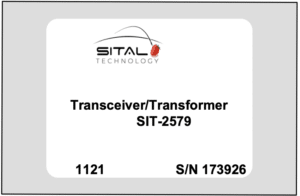
    SIT-2579

    A Dual-Channel MIL-STD-1553/1760 Transceiver-Transformer Combo.

    This integrated solution is based on the design of the SIT-1579 dual transceiver with the addition of a dual isolation transformer to provide transformer (stub) coupling.

    The SIT-2579 provides the lowest transmitter dissipation in the industry !
     

    Transceiver/Transformer SIT-2579

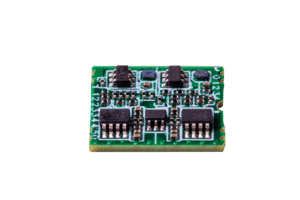
    SIT-1579

    Sital’s MIL-STD-1553/1760 Transceiver.

    It’s pin compatible with Holt’s HI-1579 transceiver and works with Sital’s IP.

    Based on discrete components, the SIT-1579 uses state of the art power switching devices which reduce the output stage power dissipation to less than 300 mW when transmitting at 100% duty cycle.
    transceiver


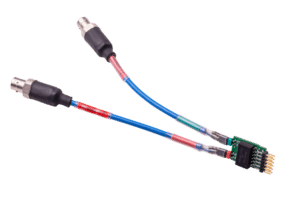
    BRD1553XVR-PMOD

    Sital’s BRD1553XVR-PMOD Adaptor Board is targeted to users developing MIL-STD-1553 applications requiring 1553 transceivers and transformers before their actual system’s hardware is available. For such applications, the BRD1553XVR-PMOD can be used for the evaluation of Sital’s 1553 IP and transceivers, or for software development.
     

    BRD1553XVR-PMOD

    2026©All rights reserved
    Contact us on Whatsapp