
ARINC‑825 and Advanced CAN Bus Solutions (Including CAN FD Support)

Home > ARINC‑825 and Advanced CAN Bus Solutions (Including CAN FD Support)

CAN Bus (FD) and ARINC 825 4 with Safety & Performance Enhancements

Sital Technology specializes in providing ARINC 825 CAN BUS solutions for the critical needs of military avionics, ground vehicles, and automotive manufacturers. Our technology supports both classican CAN (CAN 2.0) and its advanced evolution, CAN FD (Flexible Data rate), enabling high-speed , secure, and fault-tolerant communications. Our offerings are designed to safeguard military and automotive systems from cyber threats while enhancing safety through our proprietary “SnS” (Safe and Secure) technology, which includes wire fault detection and precise fault location capabilities.

Protection for Military and Automotive Applications

Sital’s ARINC 825 and CAN-based solutions are essential for automotive and military ground vehicles, as well as avionics systems that require robust protection against cyber threats. Avionics CAN is ARINC-825.

Our SnS technology not only secures systems from unauthorized access but also offers significant benefits in wire fault detection, ensuring the reliability and safety of critical communication networks.

ARINC-825 Standards and Features

Sital’s CAN BUS, CAN FD, and ARINC 825 4 solutions support 11-bit and 29-bit CAN messaging and provide the capability for transmitting and receiving messages for various lower-level and higher-layer protocols, including:

• ISO-11898-5

• CAN 2.0

• CAN-FD

• ARINC-825-4

• CANopen

• SAE J1939

• DeviceNet4

They can operate at data rates up to 4 Mb/s and provide configurable options to support CAN bus and ARINC-825-4 standards.

IP and Board-Level Solutions for Can Bus and ARINC-825

Sital offers both IP cores and board-level solutions for CAN BUS, CAN FD,and ARINC-825 interfaces. We accommodate a wide range of industrial applications, military vehicles, and commercial automotive systems. Our products support standard, extended, and remote frames and come equipped with features such as:

• 8-bit Message_ID filter, with filtering based on the Message ID and first two data bytes

• Power Monitor (listen-only) mode

• 8-message Transmit and Receive FIFOs

• Loopback mode for self-test capability to enable or disable message re-transmission.

Expanded Industry Applications for CAN Bus and ARINC-825 Solutions

Sital’s CAN BUS and ARINC-825 solutions cater to an extensive range of industries, from automotive to aerospace. The ARINC 825 protocol, developed to ensure safe data communication in avionics, is critical in maintaining robust communication networks in military, ground vehicles, and industrial systems. Sital’s ARINC 825 solutions are indispensable for industries that demand resilience, accuracy, and security in their communications infrastructure.

Evolution of ARINC-825 Protocol for Modern Applications

The ARINC-825 protocol is continuously evolving, adapting to the growing demands of modern avionics and industrial applications. Its ability to handle complex messaging formats and fault tolerance measures makes it ideal for integration into military and automotive systems. Sital’s solutions align with these advancements, ensuring that their CAN Bus and ARINC-825 solutions provide maximum performance, security, and operational efficiency.

Integration with Existing Systems

Sital’s CAN BUS ARINC 825 solutions offer seamless integration with existing infrastructures. The flexibility of CAN-FD and ARINC-825 allows for efficient data transmission rates and multiple system configurations. This ensures that our solutions can integrate into both new and existing systems, offering enhanced fault detection, speed, and security.

Safe and Secure (SnS) Technology: Cyber Authentication and Fault Detection

CAN bus, CAN-FD, and ARINC-825 interfaces are used on military ground vehicles, commercial cars, trucks, and a variety of industrial applications. Our Safe and Secure (SnS) technology satisfies the need for both cyber authentication and the capability to detect and locate electrical faults in CAN data buses. Upon power-up, Sital’s SnS sensor undergoes a “learning” process, identifying “fingerprints” or “signatures” of all nodes on the bus. This ensures continuous monitoring and immediate detection of any discrepancies.

This advanced capability allows for the identification of spoofing attempts and various electrical faults, offering detailed diagnostics including the type and approximate location of the fault.

The latter include intermittent or continuous open or short circuits in either the bus cable, a stub cable, connector, LRU, or bus termination. Furthermore, the SnS can determine the specific type of open or short circuit, along with its approximate location.

Following the detection of either a cyber authentication violation or an electrical fault condition, the SnS API will immediately inform the application software about the detected condition. In either case, it is then up to the system’s “security playbook” software to take the appropriate system-level action.

Sital is an AMD/Xilinx solutions partner
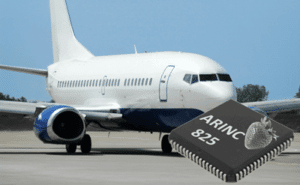
 

Large commercial plane next to ARINC 825 chip

Industry-Leading CAN IP Solutions

The Sital CAN IP is an industry-standard, Bosch CAN protocol-compliant IP core for FPGA and ASIC design implementations.

The Sital safe and secure CAN IP (“SnS CAN”) has built-in cyber resilience and network health monitoring technologies to ensure the highest Databus reliability and protection for autonomous vehicle ECUs, UAVs, Aerospace Avionics, and Industrial applications.

The Sital SnS CAN is the world’s first high-resilience CAN IP offered in a licensed business model supporting hardware vendor independence, cost management, and CAN node optimization.

CAN Bus, CAN FD, And ARINC-825 Solutions: Secure, Bosch-Compliant IP Cores With SnS Cyber Security And Wire Fault Detection

A standard CAN controller moves data. Sital’s secure CAN bus, CAN FD, and ARINC-825 IP cores also watch the bus they sit on, authenticating every node, catching spoofed messages, and pinpointing wire faults along the cable. We build them Bosch-compliant and DO-254 certifiable up to DAL A, proudly in the USA, for avionics, defense, and automotive programs that cannot afford a databus failure.

Two failure modes matter most to the engineers who design these systems: a spoofed or malicious message reaching a control node, and an intermittent wire fault that hides until it grounds a platform. Sital’s CAN cores, board-level products, and PhysiCAN USB testers address both, and you can add patented “SnS” (Safe and Secure) technology to any core for cybersecurity and wire fault location at the physical layer.

TL;DR Quick Answers

ARINC-825

Sital Technology supplies secure CAN bus, CAN FD, and ARINC-825 IP cores for avionics, defense, and automotive programs. In brief:

  • What you get: A licensed VHDL netlist that drops into any FPGA or ASIC, Bosch CAN protocol-compliant, with standard, extended, and remote frame support.
  • The differentiator: Optional “SnS” technology adds real-time source authentication, message-ID white-listing, spoofing and denial-of-service detection, and passive-TDR wire fault location with distance-to-fault data.
  • Compliance: DO-254 certifiable up to DAL A, physical layer compliant with ARINC-825 for CAN aviation, proudly made in the USA.
  • How to buy: Request a free evaluation or talk to a Sital field engineer. We deliver every core under a licensing model that keeps you independent of any single silicon vendor.

Top 5 Takeaways

  1. One core, three protocols. Sital’s core supports classic CAN bus (CAN 2.0B), CAN FD, and ARINC-825-4, with 11-bit and 29-bit identifiers and data rates from 1 Mb/s on classic CAN up to 4 Mb/s on CAN FD.
  2. Security lives on the bus, not bolted on afterward. The patented “SnS” option authenticates every node, white-lists message IDs, and flags spoofing and denial-of-service attempts in real time.
  3. It locates wire faults before they ground a platform. Using passive TDR, “SnS” detects intermittent or continuous opens and shorts across cable, stubs, connectors, LRUs, and termination, and reports distance-to-fault.
  4. Built to certify. The core is DO-254 certifiable up to DAL A, with DO-254 and DO-178 artifacts available through Sital’s certification partners.
  5. Vendor-independent and made in the USA. We deliver it as a VHDL netlist for any FPGA or ASIC, working with any COTS CAN transceiver, under a licensing model built for cost control and supply-chain strength.

Inside The Sital CAN Bus, CAN FD, And ARINC-825 IP Core

The Sital CAN IP is an industry-standard, Bosch CAN protocol-compliant core for FPGA and ASIC designs. We deliver it as a licensed VHDL netlist, so you stay independent of any single silicon vendor and can place the same proven logic across programs. If you want the fundamentals first, our primer on how CAN bus works covers the signaling and framing that this core builds on.

Core capabilities include:

  • Compliance with the Bosch CAN protocol and CAN version 2.0B, and adherence to ISO 11898-5
  • Physical layer compliant with ARINC-825 for CAN aviation, plus support for higher-layer protocols including CANopen and SAE J1939
  • Standard, extended, and remote frames, with 8 maskable identifier filters that filter on the ID and the first two data bytes
  • 32-message transmit and receive FIFOs, a 16-bit free-running counter for time-tagging, loopback self-test, listen-only monitor mode, and re-transmission disable
  • A PCI, local-bus, or SPI CPU interface, compatible with any COTS CAN transceiver

That predictability under real operational loads is the first thing any safety-critical databus has to earn.

What ARINC-825 Means For Avionics CAN

ARINC-825 is the CAN-based higher-layer protocol standardized for avionics. It builds on the same Bosch foundation as the Controller Area Network (CAN) standard used across the automotive world, then adds the messaging structure and discipline aircraft systems require. For a deeper breakdown, read our guide to the ARINC-825 standard.

For an engineer, the path runs in one direction:

  • Classic CAN bus (CAN 2.0B) gives you the arbitration-based foundation at rates up to 1 Mb/s.
  • CAN FD extends the payload and lifts the data phase to 4 Mb/s, easing bandwidth pressure on busier networks.
  • ARINC-825-4 layers avionics-grade conventions on top, so the same physical bus carries deterministic aircraft messaging.

Because Sital’s core supports all three from one VHDL netlist, you can target a ground-vehicle CAN program and an avionics ARINC-825 program without re-architecting your interface logic.

“SnS” Cyber Security And Wire Fault Detection At The Physical Layer

Here is where Sital parts ways with a conventional CAN controller. Most cores move data. The “SnS” option also watches the bus.

On power-up, the “SnS” sensor learns the electrical signature of every node on the bus. From that baseline, it does two jobs at once:

  • Cyber resilience: real-time source authentication, message-ID white-listing, anomaly detection and reporting, optional IPS, and denial-of-service mitigation. When the sensor sees a spoofing attempt or an out-of-policy message, the “SnS” API alerts your application software so your security playbook can act.
  • Wire fault detection: using passive TDR, “SnS” detects and locates intermittent or continuous open and short circuits in the bus cable, stub cables, connectors, connected LRUs, and termination, and returns distance-to-fault information.

In our field experience, that second capability is what turns a multi-day fault hunt into a guided repair, because the system points to the fault instead of leaving a technician to chase it.

A high-detail, realistic close-up of a Sital CAN bus / CAN FD / ARINC-825 secure IP core implemented on an FPGA mounted on a green PCB, used in avionics and automotive DataBus systems.

From Avionics To Automotive: Where Secure CAN Matters

The same core serves a range of platforms, each leaning on a different strength:

  • Military and commercial avionics: ARINC-825-4 messaging with DO-254 DAL A certifiability
  • Defense and commercial ground vehicles: hardened CAN bus communication that resists spoofing on contested platforms
  • Automotive ECUs and autonomous-vehicle systems: cyber resilience and network health monitoring for safety-critical control
  • UAVs and industrial systems: high-reliability messaging where an undetected fault is not an option

CAN earned that range in the car first. Our look at how CAN bus reshaped the automotive industry traces how it became the backbone for the ECUs that now demand authentication.

Why Engineers Choose Sital

For over 25 years, Sital Technology has built communication bus solutions that are field-proven in the most extreme operational environments, from outer space to active military theaters. The Sital SnS CAN is the world’s first high-resilience CAN IP offered in a licensed business model, one that supports hardware-vendor independence, cost management, and CAN node optimization.

Behind the core sits a turnkey partner ecosystem: AMD/Xilinx and Lattice for FPGA and MCU design, Micross for high-reliability components, and Logicircuit and ConsuNova for DO-254 and DO-178 certification artifacts. Our products are proudly made in the USA to meet ITAR regulations and to strengthen the supply chain.


Infographic of CAN Bus, CAN FD & ARINC-825 IP Cores | Secure SnS

“In more than two decades of fielding databus solutions, we’ve learned that the failures that ground a platform are rarely the obvious ones. They’re the spoofed message no controller flagged and the intermittent short no tester could find. We built ‘SnS’ into the physical layer so the bus reports both the moment they happen.” 

— The Sital Technology Team

Essential Resources

Researching a secure CAN bus, CAN FD, or ARINC-825 IP core means weighing protocol fundamentals, certification, and real cyber risk. These seven authoritative sources are the next steps an engineer or program lead needs to make an informed decision.

Master The CAN Foundation Before You Specify A Higher-Layer Protocol

SAE J1939 is the most widely deployed CAN higher-layer protocol in heavy-duty vehicles, and its standard documents show how CAN’s 29-bit messaging works in production networks. Reading it clarifies what ARINC-825 inherits from CAN and what it adds. 

Source: SAE J1939 Serial Control and Communications Vehicle Network Standard

See Why Avionics Architectures Lean On Redundant, Reliable Data Buses

This NASA technical report details an avionics architecture built on triple-redundant, distributed MIL-STD-1553 buses, with a full reliability analysis that shows the fault-tolerance bar avionics databuses must clear. 

Source: NASA Technical Report On Redundant MIL-STD-1553 Avionics Architecture

Understand The Real CAN Attack Surface Before You Trust A Bus

This landmark USENIX Security study showed researchers remotely compromising a modern automobile through its CAN-connected systems, which makes the case for authentication and anomaly detection on the bus itself. 

Source: USENIX Security Study On Automotive Attack Surfaces

Align Your Vehicle Program With Federal Cybersecurity Guidance

NHTSA’s Cybersecurity Best Practices for the Safety of Modern Vehicles spells out the risk-based processes regulators expect across a vehicle’s lifecycle, a useful checklist when you evaluate a secure CAN controller. 

Source: NHTSA Cybersecurity Best Practices For The Safety Of Modern Vehicles (2022)

Apply Recognized Operational-Technology Security Controls

NIST SP 800-82 Revision 3, the Guide to Operational Technology (OT) Security, lays out the threat models, vulnerabilities, and tailored control baselines that map directly onto embedded databus systems. 

Source: NIST SP 800-82 Rev. 3, Guide To Operational Technology Security

Confirm Your Hardware Can Actually Be Certified

RTCA’s DO-178 and DO-254 guidance defines the design-assurance objectives, including DAL A, that airborne electronic hardware and software must meet, which is why certifiability belongs on your buying checklist rather than your wish list. 

Source: RTCA DO-178 And DO-254 Standards Overview

Build Defense-In-Depth Around The Bus

CISA’s Industrial Control Systems recommended practices lay out defense-in-depth strategies for cyber-physical systems, which help you place a secure CAN core inside a larger protective architecture. 

Source: CISA ICS Recommended Practices

Supporting Statistics

The case for securing the databus is not theoretical. Three findings from U.S. government sources frame the stakes.

Tested Weapon Systems Show Why Bus-Level Security Matters

Government test teams took control of weapon systems under development using relatively simple tools and techniques, and the Department of Defense found mission-critical cyber vulnerabilities in nearly all of them. In our experience, that is exactly why cyber resilience belongs on the bus, not only at the network perimeter. 

Source: U.S. GAO Report On Weapon Systems Cybersecurity (GAO-19-128)

The Avionics Installed Base Is Vast And Long-Lived

The FAA’s 2024 survey counted roughly 213,756 active general aviation aircraft in the United States, each carrying multiple databus links. New IP cores have to interoperate with that legacy fleet, which is why protocol compliance and certifiability matter as much as raw speed. 

Source: FAA Aerospace Forecast, Fiscal Years 2026-2046

The Automotive CAN Attack Surface Is Expanding Fast

Registered light-duty electric vehicles on U.S. roads grew from fewer than 100,000 in 2012 to 2.13 million in 2021, a more than twentyfold jump. Every one of those vehicles rides on CAN and CAN FD with more ECUs and more entry points, and that trend is driving demand for authenticated CAN nodes. 

Source: U.S. Energy Information Administration, Today In Energy

Final Thoughts And Opinion

A secure CAN bus, CAN FD, and ARINC-825 IP core has to do three jobs at once: move data reliably, prove it can be certified, and defend the platform it sits on. Sital’s core does all three from one VHDL netlist.

Our opinion, formed over 25-plus years of fielding databus products:

  • Speed is the easy part. Reaching 4 Mb/s on CAN FD is table stakes. The harder, more valuable work is authenticating every node and locating a wire fault before it becomes a failure.
  • Certifiability should be a buying criterion. A core that is DO-254 certifiable up to DAL A saves a program the months of rework that a faster-but-uncertifiable core would cost.
  • Physical-layer security is a durable approach. Perimeter defenses get bypassed. A bus that authenticates its own traffic and reports its own electrical health is far harder to fool.

If your roadmap touches avionics, defense ground vehicles, or automotive control, the question is no longer whether to secure the CAN bus. It is how early you design that security in.

Frequently Asked Questions

Q: What Is The Difference Between CAN Bus, CAN FD, And ARINC-825?

A: CAN bus (CAN 2.0B) is the Bosch-defined foundation running up to 1 Mb/s. CAN FD extends the payload and lifts the data phase to 4 Mb/s. ARINC-825-4 is the avionics higher-layer protocol built on CAN. Sital’s core supports all three from one VHDL netlist.

Q: How Does Sital’s “SnS” Technology Secure A CAN Node?

A: On power-up, it learns the electrical signature of every node, then authenticates sources, white-lists message IDs, and flags spoofing and denial-of-service attempts in real time. When it sees a violation, the “SnS” API alerts your software so your security playbook can respond.

Q: Can The Same IP Core Also Find Wiring Faults?

A: Yes. Using passive TDR, “SnS” detects intermittent or continuous opens and shorts across cable, stubs, connectors, LRUs, and termination, and reports distance-to-fault. In the field, that turns a multi-day hunt into a guided repair.

Q: Is The Core Certifiable For Avionics?

A: It is DO-254 certifiable up to DAL A, the highest design-assurance level, with DO-254 and DO-178 artifacts available through Sital’s certification partners.

Q: Which FPGAs And Transceivers Does It Support?

A: We deliver it as a licensed VHDL netlist that suits any FPGA or ASIC, with a PCI, local-bus, or SPI interface, and it works with any COTS CAN transceiver, so you keep hardware-vendor independence.

Q: How Do I Evaluate It For My Program?

A: Request a free evaluation or talk to a Sital field engineer. We will match the core’s configuration to your protocol mix, certification target, and security requirements before you commit.

Ready To Secure Your CAN Bus, CAN FD, And ARINC-825 Designs?

Put a Bosch-compliant, DO-254-certifiable core with patented “SnS” cyber security and wire fault detection into your next FPGA or ASIC. Talk To An Expert or request an Evaluation to get started, or Check Our Products Catalog to see the full CAN bus and ARINC-825 lineup.

Please Ask Us A Question

    CAN/FD BUS and ARINC-825-4 Solutions

    Sital Technology manufactures a number of high-quality solutions for the CAN/FD BUS/ARINC-825-4 Protocols.

    Press on the desired type of solution you are looking for.

    Safe and Secure
    for CAN/FD BUS and ARINC-825-4

    For most of its CAN/FD BUS and ARINC-825-4 solutions, Sital offers an option for its Safe and Secure (SnS) Technology. By means of enhanced physical layer signal monitoring, Sital’s SnS provides continuous cyber authentication for detecting “spoofing” (or impersonating) nodes on 1553 buses. In addition, Sital’s SnS also provides electrical fault detection. This enables detection and locating of faults such as intermittent or continuous open or short circuits in data bus and stub cabling, couplers, connectors, connected LRUs and termination resistors.
    Microchip with a strawberry pattern on it, surrounded by a circuit board pattern next to a security symbol
    2026©All rights reserved
    Contact us on Whatsapp