MIL-STD-1553 IP Cores with Cybersecurity and Wirefault Detection and Location
MIL-STD-1553 IP Cores
Sital Technology is proud to present its MIL-STD-1553 IP cores, which are available in several variations to meet the specific requirements of a broad range of applications. These cores come with a number of important features and performance benefits, such as the following:
Compatibility
Sital Technology offers a selection of MIL-STD-1553 IP cores that can accommodate a wide variety of different system requirements. These cores can be instantiated on to either FPGAs or ASICs.
This includes its flagship BRM1553D core:
The BRM1553D provides register and memory structure with an architecture that is compatible with DDC’s® Enhanced Mini-ACE® and other components. This includes:
- A bus controller (BC) with a set of 20 programmable instructions
- A remote terminal (RT) mode supporting single, double, and circular buffering schemes
- A message monitor providing filtering based on RT address and T/R-bit/subaddress
1553 Cyber Security & BC Firewall
Sital Technology’s BC Firewall is now a standard feature in its BRM1553D IP core and other MIL-STD-1553 products.
The BC Firewall provide intrusion detection system (IDS) and intrusion prevention system (IPS) capabilities for unauthorized messages transmitted by rogue BCs.
IDS is 100% accurate, thus allowing IPS.
The BC Firewall continuously monitors data buses and detect any impersonating messages (IDS).
The BC Firewall’s intrusion prevention (IPS), invalidates detected impersonating messages by crashing the bus during the transmission, invalidating the commands and preventing RTs from responding to such malicious commands.
For more information about “BC Firewall“
Sital Safe and Secure 1553 IP Core
Sital’s patented Safe and Secure (SnS) technology provides continuous real-time cyber authentication and wire fault detection.
Sital is the only MIL-STD-1553 supplier capable of detecting and locating open and short circuit electrical faults in bus or stub wires, connectors, couplers, terminators, and LRUs.
The BRM1553D-CS IP core provides continuous real-time cyber authentication. It can detect and locate intermittent or continuous open and short circuit electrical faults in bus or stub wires, connectors, couplers, terminators, and LRUs.
For more information about SnS.
Low-power Transceivers
Sital’s IP is complemented by its own transceivers. Sital’s MIL-STD-1553 transceivers offer the industry’s lowest power consumption and dissipation. Sital can supply either packaged transceivers or transceiver IP (design documentation).
Sital’s IP cores can also operate with transceivers and transformers from other suppliers. Sital’s IP has passed RT validation testing performed by several third parties.
For use with its MIL-STD-1553 transceivers, Sital also offers a line of low-cost non-QPL isolation transformers complying with MIL-PRF-21038/27E electrical specifications.
he transformers are drop-in replacements for industry standard transformers. These are available in multiple configurations including single and dual, through-hole, and surface mount. They also support either transformer-coupled only or both transformer-coupled and direct-coupled configurations.
Sital offers a cost-effective option to supply complete bundled nodes consisting of its MIL-STD-1553 IP, transceivers, and transformers.
DO-254 and DO-178
For civil aircraft flight-critical systems and certain military applications, Sital can supply its IP and components with DO-254 certifiability artifacts up to and including DAL A (DO254-BRM1553D). Sital can also certify its software drivers with DO-178 up to and including DAL A.
IRIG-106 Chapter 10
Sital’s MIL-STD-1553 monitor includes an option to format monitored data in accordance with IRIG-106 Chapter 10, which defines a standardized file format used for data recorders.
Turnkey solutions
As a means for providing a turnkey solution and reducing customers’ design schedules, Sital offers its “Integrated 1553” integration service for SoC (system-on-chip) FPGAs. For example, Sital can integrate one of its single-instance or multi-instance IP cores with an on-FPGA processor over an on-chip bus such as AXI. This integration also comes with the API/library and low-level driver software specific to the customer’s operating system and on-chip bus. For a Xilinx FPGA, this would leverage Xilinx’s Vivado design suite.
Minimizing logic resources
Sital’s 1553 IP cores minimize the amount of required FPGA or ASIC logic resources by including synthesis compiling options for any combination of BC, RT, and/or Monitor modes. In addition, cores can operate with a selection of 4K, 8K, 16K, 32K, or 64K words of shared memory.
The BRM1553D features a high-speed synchronous interface to dual port shared RAM and internal registers. This includes a selectable input clock frequency that Sital can configure its core for in order to match customer requirements.
Many variations
Sital can supply cores with either a single instantiation or multiple instantiations. In addition to the BRM1553D base version, Sital can also supply the following:
- BRM1553PCI – A version with a built-in PCI target back-end interface
- BRM1553SPI – A SPI back-end interface
- BRM1553FE – Most compact Cores, RAM free 1553, for use in simple system applications.
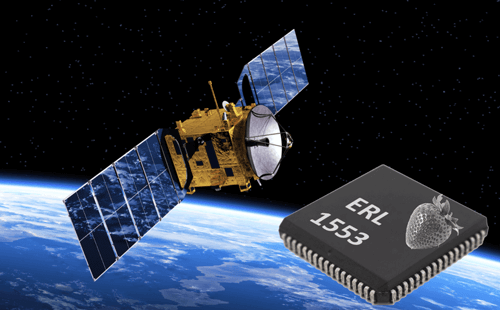
- BRM1553ERL – A version with SEU mitigation features for use in space applications
Future-proof Netlist
Sital’s IP cores are provided in vendor independent VHDL netlist that target all FPGA manufacturers families. The cores are supplied with simulation scripts, test bench code, and a 1553 bus tester VHDL model.
API/library and driver software
Sital supplies API/library software with its IP cores. There are also OS drivers available for VxWorks, Linux and Windows. Further, Sital can supply drivers for other real time operating systems as required. Another option Sital offers is its “Integrated 1553” integration service for SoC (system-on-chip) FPGAs.
For example, Sital can integrate one of its single- or multi-instance IP cores with an on-FPGA processor over an on-chip bus such as AXI, along with its API/library and low-level driver for the operating system and on-chip bus. For a Xilinx FPGA, this would leverage Xilinx’s Vivado design suite.
Please Ask Us A Question
IP CORE for MIL-STD-1553
BRM1553D
Sital’s flagship MIL-STD-1553 IP core, used for interfacing between a processor and a MIL-STD-1553 bus. Provides BC, RT and Monitor operation, with architectural compatibility with DDC’s® Enhanced Mini-ACE® and other products.
BRM1553D-SnS – This core consists of the BRM1553D, along with an enhancement implementing Sital’s Safe and Secure (SnS) functionality.
BRM1553PCI
FPGA IP Core with PCI Target
Local Bus & 1-8 instances of BRM1553D.
Overcome problems related to aerospace industry, where high reliability, wide temperature range and easy integration are the key !

BRM1553ERL
Selected by NASA !
Designed from ground up for use in space applications, Sital’s BRM1553ERL IP core offers a uniquely compact, robust and reliable BC, RT, MT solution for any FPGA and ASIC