
Total-OCTAVA™️ MIL-STD-1553 Terminal with DDC®️ Compatibility

Home > Total-OCTAVA™️ MIL-STD-1553 Terminal with DDC®️ Compatibility

MIL-STD-1553 Terminal with Integrated Transformers
Providing Compatibility with DDC® Total-ACE®
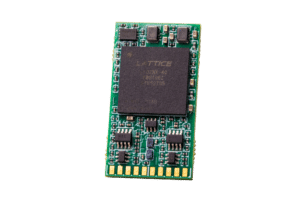
Total OCTAVA TOP

Total-OCTAVA™ — A Complete, Future-Proof MIL-STD-1553 Solution

Sital’s Total-OCTAVA™ delivers a fully integrated, all-digital MIL-STD-1553 solution designed for long-life aerospace and defense platforms, combining proven field experience with modern FPGA technology.

The Total-OCTAVA™ is a pin-to-pin replacement for DDC’s® BU-64863 Total-ACE®, providing full electrical, mechanical and architectural compatibility.


Fully Integrated Architecture

Sital’s Total-OCTAVA™ MIL-STD-1553 devices integrate a complete solution in a compact 312-ball Plastic BGA (Ball Grid Array) package.

That package integrates:

  • BC/RT/Monitor or RT-only MIL-STD-1553 protocol engine

  • Memory management and processor interface logic (4K or 64K words of RAM)

  • Dual 1553 transceiver and dual transformer


Ultra-Low Power Design

Sital’s MIL-STD-1553 transceivers are designed for extremely low power consumption and heat dissipation, supporting power-sensitive avionics and mission-critical platforms.


Cyber Security at the Data-Bus Level

Total-OCTAVA™ BC includes Sital’s unique Embedded BC FireWall capability.

The BC can detect messages transmitted by an impersonating Bus Controller and report them to the host processor. An optional Intrusion Protection System (IPS) provides additional protection against malicious or unintended bus activity.


Proven Heritage

The design of Total-OCTAVA™ is based on Sital’s original OCTAVA™, a drop-in replacement for DDC’s® Enhanced Mini-ACE.

Over the past decade, thousands of OCTAVA devices have been deployed and flown in operational military systems, establishing a strong field-proven foundation for Total-OCTAVA™.


Built on Lattice Certus™-NX FPGA Technology

Total-OCTAVA™ is implemented on Lattice Semiconductor’s Certus™-NX FPGA, leveraging its low power consumption, high reliability, and long-term availability — key requirements for aerospace and defense programs with extended lifecycles.

This architecture enables a future-proof, all-digital MIL-STD-1553 solution, while maintaining full form-fit-function compatibility with legacy DDC® Total-ACE® devices.

Learn more about Lattice Certus-NX → [link]


Multi-Protocol Support

Total-OCTAVA™ supports multiple protocols, including:

  • MIL-STD-1553A-C / MIL-STD-1760

  • STANAG-3838 and General Dynamics 16PP303

  • McAir A3818, A5232 and A5690

For McAir-based applications, Sital can supply Micro-OCTAVA-TE devices with compatible transceivers.

Total-OCTAVA: A Pin-to-Pin MIL-STD-1553 Replacement for DDC’s BU-64863 Total-ACE with Integrated BC/RT/MT, Memory, and Embedded BC Firewall

When a DDC® BU-64863 Total-ACE® goes end-of-life, the program team rarely wants a redesign. They want the same 312-ball footprint, the same software, and a part they can still buy a decade from now. Sital built the Total-OCTAVA for exactly that situation: a pin-to-pin MIL-STD-1553 terminal that takes the Total-ACE’s place and carries an embedded BC Firewall that the original never had.

Inside that one BGA sits a BC/RT/MT protocol engine, built-in memory, and a dual transceiver and dual transformer, all running in digital logic on the Lattice Certus-NX FPGA. It’s certified as DO-254 DAL A, and it’s made in the USA. For a team swapping out a Total-ACE because of obsolescence, supply-chain risk, or a new cybersecurity requirement, it’s a form-fit-function replacement that keeps your pins and your software in place.

TL;DR Quick Answers

Total-OCTAVA

The Total-OCTAVA is Sital’s integrated MIL-STD-1553 terminal and a pin-to-pin replacement for DDC’s BU-64863 Total-ACE, with security that the original doesn’t carry.

What it is: one 312-ball BGA holding a BC/RT/MT protocol engine, 4K or 64K words of built-in memory, and a dual transceiver and dual transformer.

Why it’s secure: an embedded BC Firewall catches impersonating Bus Controllers and denial-of-service traffic, and you can add “SnS” cyber-security IDS/IPS. The original Total-ACE offers none of that.

Why it lasts: it’s all-digital on the Lattice Certus-NX FPGA, so it stays available for long-life programs.

Compliance: Sital designs it for DO-254 and DO-178 certifiability up to DAL A.

How to buy: It’s made in the USA. Ask Sital for an evaluation unit and hardware samples.

Top 5 Takeaways

  • It drops pin-to-pin. The Total-OCTAVA matches DDC’s BU-64863 Total-ACE electrically, mechanically, and architecturally, so the board doesn’t change.
  • Everything sits in one package. The BC/RT/MT engine, 4K or 64K words of memory, and a dual transceiver and dual transformer all live in a 312-ball BGA.
  • It adds security that the original lacks. That means an embedded BC Firewall, with optional “SnS” IDS/IPS and wire-fault detection.
  • It’s built to stay available. The all-digital Lattice Certus-NX design runs at low power, and Sital sources it for the long term.
  • It’s program-ready. Sital makes it certifiable to DO-254 and DO-178 up to DAL A in the USA.

Total-OCTAVA: A Pin-To-Pin MIL-STD-1553 Replacement For DDC’s BU-64863 Total-ACE With Integrated BC/RT/MT, Memory, And Embedded BC Firewall

Most teams come to the Total-OCTAVA for the same reason. A DDC Total-ACE is heading toward obsolescence, and reopening the board layout isn’t on the table. The job is to keep the footprint and the software while lowering risk, and the Total-OCTAVA does that with cyber resilience that older parts can’t match.

A True Pin-To-Pin Replacement For DDC’s BU-64863 Total-ACE

Drop the Total-OCTAVA into the BU-64863 footprint, and it matches the original electrically, mechanically, and architecturally. Its register and memory architecture lines up with DDC’s Enhanced Mini-ACE, Mini-ACE Mark3, Micro-ACE(TE), and Total-ACE, so your design and your software carry straight over.

  • Same 312-ball BGA footprint, so the PCB stays as it is.
  • Register and memory compatibility across the DDC ACE family.
  • Drivers for VxWorks, Linux, and Windows that match DDC’s AceXtremeME API.

Built For The MIL-STD-1553 Standard, Without Compromise

The Total-OCTAVA meets MIL-STD-1553B Notice 2, MIL-STD-1553A, and MIL-STD-1760, and it runs as a bus controller, a remote terminal, or a monitor (or RT-only). Everything the MIL-STD-1553 standard defines at the protocol and electrical level maps onto a mode the terminal already supports.

Our MIL-STD-1553 tutorial breaks down those modes and the command/response word formats in plain terms.

  • An autonomous bus controller with a 29-instruction set, condition flags, and a general-purpose queue.
  • RT buffering in single, double, and circular modes.
  • A selective monitor with filtering and IRIG-106 Chapter 10 storage.
  • 4K or 64K words of built-in RAM.

Security Designed Into The Physical Layer

Where the original Total-ACE leaves the bus unguarded, the Total-OCTAVA builds protection into the bus controller itself with an embedded BC Firewall. You can add Sital’s patented “SnS” technology on top for deeper cyber security and fault detection.

  • The BC Firewall spots messages from an impersonating Bus Controller and can invalidate them.
  • It flags denial-of-service activity on the bus and reports it to the host.
  • Optional “SnS” adds cyber-security IDS/IPS and locates wire faults across cables, stubs, couplers, terminators, and connected LRUs.

Future-Proof, All-Digital, And Made In The USA

Sital runs the Total-OCTAVA entirely in digital logic on the Lattice Certus-NX FPGA, picked for low power, reliability, and the long-term availability that extended-life programs depend on. It belongs to the wider MIL-STD-1553 family at Sital Technology, and it builds on the OCTAVA design that has flown in thousands of fielded military systems over the past decade.

  • An all-digital design for low power and long-term availability.
  • 3V-only operation, rated -40 to +100°C (Sital can support -55 to +125°C on request).
  • Made in the USA, which keeps procurement ITAR-aligned and the supply chain resilient.


“In 25 years of building 1553 terminals, we’ve learned that a drop-in only earns trust when it matches the original pin for pin and then does something more. That’s why the BC Firewall sits inside the Total-OCTAVA’s protocol engine, right where impersonation and bus faults actually show up.”

— Sital Technology Engineering Team

Essential Resources

These are the references worth keeping open while you evaluate a secure, DO-254-certifiable replacement for the Total-ACE, roughly in the order an engineer reaches for them.

Know Exactly What MIL-STD-1553 Requires Of Your Terminal

Read the command/response multiplex data bus standard, as NASA endorses it, then check each Total-OCTAVA mode (BC, RT, and Monitor) against it.

Source: NASA Technical Standards — MIL-STD-1553

Master DO-254 Before Your Hardware Audit

RTCA’s DO-254 sets the design-assurance objectives airborne hardware has to meet up to DAL A. It’s the framework Sital builds the Total-OCTAVA to satisfy.

Source: RTCA DO-254 Course Overview

See How The FAA Applies DO-254 To Real Programs

FAA Advisory Circular 20-152A shows how DO-254 earns airworthiness approval for FPGAs and complex hardware, which helps when you map out a certification plan.

Source: FAA Advisory Circular 20-152A

Confirm Interoperability With The Commercial 1553 Equivalent

SAE AS15531 is functionally equivalent to MIL-STD-1553B with Notice 2. Reach for it when a platform mixes military and commercial specifications.

Source: SAE AS15531 Standard

Lock Down Your Supply Chain Against Cyber Risk

NIST SP 800-161r1 spells out cybersecurity supply-chain risk-management practices, useful context when you’re choosing a trusted, US-made source.

Source: NIST SP 800-161r1, Cybersecurity Supply Chain Risk Management

Look For Security That’s Designed In From The Start

CISA’s Secure by Design guidance argues that security belongs in the product from the outset. That’s the same thinking behind an embedded BC Firewall.

Source: CISA Secure By Design Guidance

Verify Your ITAR And Export-Control Obligations

The ITAR governs the export of defense articles on the U.S. Munitions List, which matters when you source defense-grade, US-made parts and keep the chain compliant.

Source: eCFR — ITAR, 22 CFR Part 120

Supporting Statistics

Three numbers explain why a secure, US-made, drop-in 1553 terminal is worth the swap. We design for the failure modes behind each one.

Cyber Exposure Is The Norm, Not The Exception

From 2012 to 2017, Department of Defense testers found mission-critical cyber vulnerabilities in nearly every weapon system they evaluated while it was still in development, and they often took control with basic tools. We treat the DataBus as one of those open doors, which is why the BC Firewall sits on it.

Source: GAO-19-128, Weapon Systems Cybersecurity

Counterfeit Parts Reach Deep Into The Defense Supply Chain

A Senate Armed Services Committee investigation traced roughly 1,800 cases of suspect counterfeit electronic parts, more than a million parts in total, with about 70% tracked back to China. Buying a single-source, US-made terminal takes the brokers out of that path.

Source: Senate Armed Services Committee Report On Counterfeit Electronic Parts

Short Part Lifecycles Drive Obsolescence Risk

A U.S. Department of Commerce assessment found that commercial electronic parts can reach end-of-life in as little as two years, while defense platforms stay in service for decades. The same study reported that 39% of the defense-supply-chain organizations it surveyed had run into counterfeit electronics over four years. An all-digital design that stays available keeps you out of that bind.

Source: U.S. Commerce / BIS — Defense Industrial Base Assessment Of Counterfeit Electronics

Final Thoughts & Opinion

A 1553 terminal swap is a chance to fix more than one problem at the same time. Obsolescence, broker-driven supply risk, and an unguarded bus tend to show up together, and Sital built the Total-OCTAVA to take all three off the table in a single footprint.

  • Our view: matching the original part is table stakes, and the real upgrade is protecting the bus at the physical layer.
  • From the field: the buses we see fail in service rarely fail at the protocol layer. They fail at wiring, connectors, and impersonation, which is exactly where the BC Firewall and “SnS” do their work. Our write-up on DataBus cybersecurity across 1553 and ARINC-429 covers how that protection works.
  • Bottom line: if you’re already opening the design to second-source a Total-ACE, the added cost of cyber resilience and long-term availability is small.

Frequently Asked Questions

Q: Is The Total-OCTAVA A True Drop-In For DDC’s BU-64863 Total-ACE?

A: Yes. It’s pin-to-pin and matches the original electrically, mechanically, and architecturally in the same 312-ball BGA, so you don’t redesign the board.

Q: What’s Integrated On The Chip?

A: A BC/RT/Monitor (or RT-only) MIL-STD-1553 protocol engine, 4K or 64K words of memory, and a dual transceiver and dual transformer.

Q: What Does The Total-OCTAVA Add That The Original Doesn’t?

A: An embedded BC Firewall that catches impersonating Bus Controllers and denial-of-service traffic, plus optional “SnS” cyber security and wire-fault detection. Sital builds it into the design rather than adding it afterward.

Q: Will My Existing Total-ACE Software Work?

A: Its register and memory architecture match the DDC ACE family, and Sital’s VxWorks, Linux, and Windows drivers match DDC’s AceXtremeME API.

Q: Is It Certifiable For Safety-Critical Programs?

A: Yes. Sital designs it for DO-254 and DO-178 certifiability up to DAL A, with artifacts available through its partners Logicircuit and ConsuNova.

Q: Where Is It Made, And Why Does That Matter?

A: Sital makes it in the USA. That keeps procurement ITAR-aligned and your supply chain off the broker market, the counterfeit reports describe.

Replace Your Total-ACE Without Compromise

See how the Total-OCTAVA fits your existing MIL-STD-1553 design and adds the security a legacy Total-ACE can’t. Talk to an expert, or request an evaluation unit and hardware samples.

  • MIL-STD-1553B Notice 2, MIL-STD-1553A and MIL-STD-1760 compliant terminals
  • Second Source to DDC® BU-64863T8 Total-ACE®
  • 100 x 0.600 x 0.185-inch (27.5 x 15.2 x 4.7 mm) plastic 312-ball BGA
  • Register/memory architecture and functionality compatible with DDC® Enhanced Mini-ACE®, Mini-ACE Mark3®, Micro-ACE(TE)® and Total-ACE®
  • Implemented on Lattice Certus™-NX FPGA for low power, reliability and long-term availability
  • Asynchronous local bus host interface. Available with options for high-performance parallel interface, PCI Express, high-performance synchronous PCI or SPI interface
  • Highly autonomous BC with 29 instructions, condition flags and general purpose queue
  • For RT mode, single, double and circular buffering options
  • Selective Monitor mode with filtering and programmable option for storing monitored data in IRIG-106 Chapter 10 file format
  • 50% Rollover Interrupts for RT and Monitor Stacks & Circular Buffers
  • 3V only power, with very low power dissipation and built-in real-time transmitter “tails” compensation to eliminate residual voltages (dynamic offset).
  • Available in -40 to 100° C temperature range. For -55 to 125° C, consult Sital.
  • BC detection of impersonating BC, with option to invalidate impersonating messages
  • RT monitoring for wire faults and reporting information
  • Denial of Service detection
  • As an option, Sital also offers its Safe and Secure (SnS) detection of authentication violations, plus wire fault detection and location, plus a cloud-based Health Management application.
MIL-STD-1553 Terminal with Integrated Transformers Providing Compatibility with DDC® Total-ACE®

for Free Evaluation and hardware Samples

safe illustration

Safe and Secure DataBus Solutions

Sital’s cutting-edge, innovative “SnS” Technology is designed for IP Core’s physical layer. Our solutions offer unprecedented cyber security and DataBus fault finder capabilities.


We supply our products with DO-254 and DO-178 certifiability, including DAL A. Our partners: Logicircuit and ConsuNova provide the DO-254 and DO-178 artifacts. Through enhanced physical layer monitoring, the patented “SnS” analyzes all DataBus messages and provides 2 unique capabilities.

2026©All rights reserved
Contact us on Whatsapp